
Deep is not about force, it is about speed
Deep tissue differs from the massage you are used to not because the pressure is harder, but because the hand moves more slowly and goes deeper in turn, one layer at a time.
First the skin and the subcutaneous fascia, then the large superficial muscles, and only after that whatever lies beneath them. The forearm or finger slows to roughly one to three centimetres per second along the way. It is the slow tempo, not the effort, that makes the tissue let the hand in deeper.
Fast, strong pressure produces the opposite result: the muscle answers with protective tension, and instead of a released area you get soreness and bruising. That is why a deep tissue session looks dull from the outside — few movements, many pauses, and a client breathing evenly.
Most requests take one of two shapes. The “desk neck”: the upper back and shoulders after 8-10 hours at a laptop, the head carried forward, the base of the skull growing heavy by evening. And the “on-your-feet lower back”: the lower back and pelvis in people who drive a lot, stand all day or train without recovery. Both scenarios respond well to layered work — provided that after the session you change at least something about your load.
- Tempo — one to three centimetres per second; on the densest spots the hand is almost still.
- Depth — layer by layer, from the top down, with no attempt to punch straight through the surface layer.
- Discomfort — a working 6-7 out of 10: noticeable, but your breathing stays even.
- Format — home and hotel visits across Area Metropolitana de Barcelona; table, linens, oil and towels are mine.
- Length — 60, 90 or 120 minutes; 90 is the working standard for the whole back.
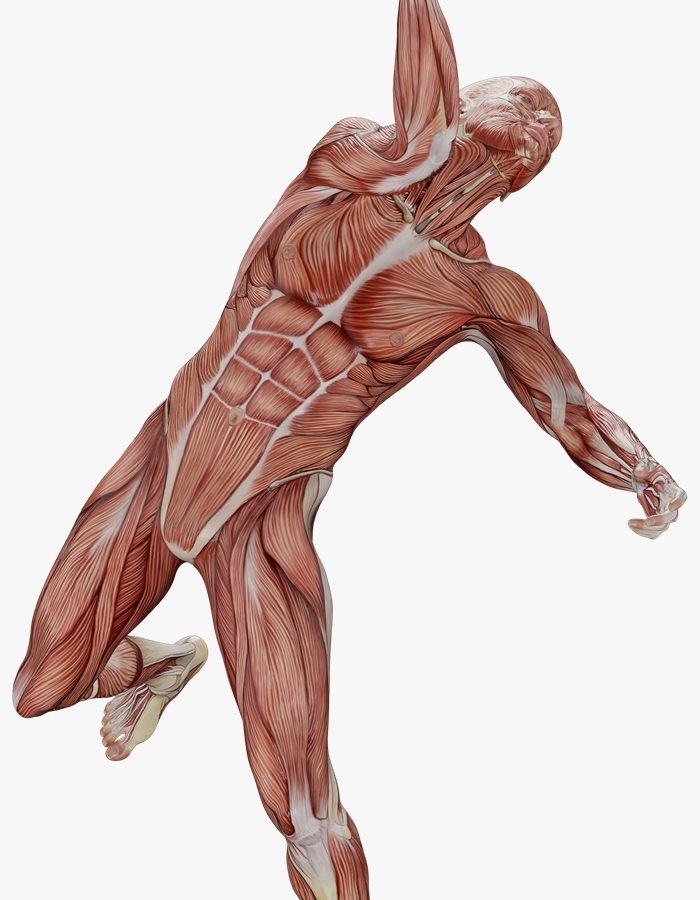
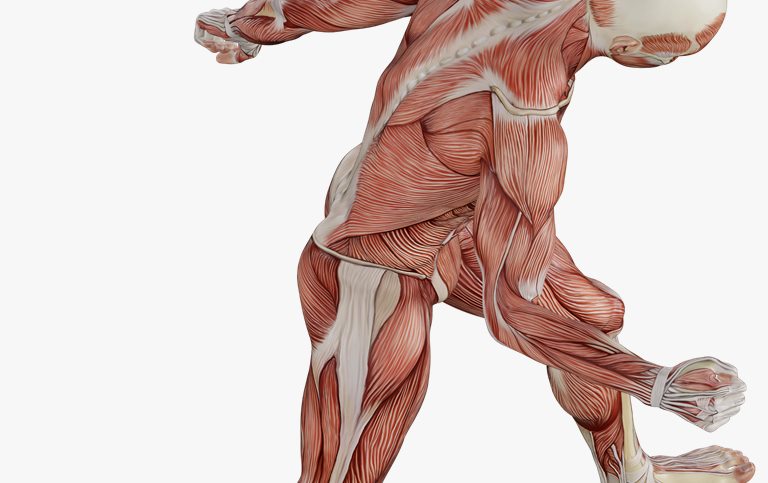
Rotation of the trunk: the obliques and the serratus anterior are under tension. The serratus along the ribs is a frequent and undeservedly forgotten source of pain in the side.
- External oblique (m. obliquus externus abdominis)
- Serratus anterior (m. serratus anterior)
- Rectus abdominis (m. rectus abdominis)
- Quadriceps (m. quadriceps femoris)
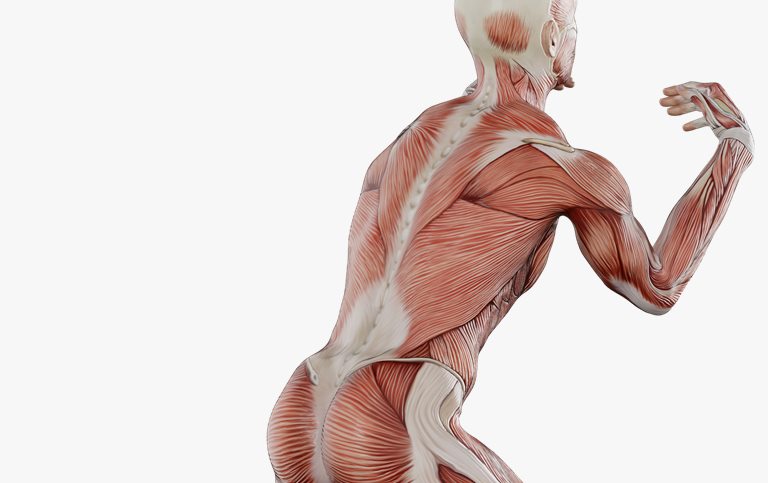
The posterior chain, muscle by muscle
The superficial layer of the back and legs, labelled the way an anatomy atlas does it. For each muscle, a short note on why it matters in deep tissue work.
Hover over a name or tap it, and its point lights up on the figure.
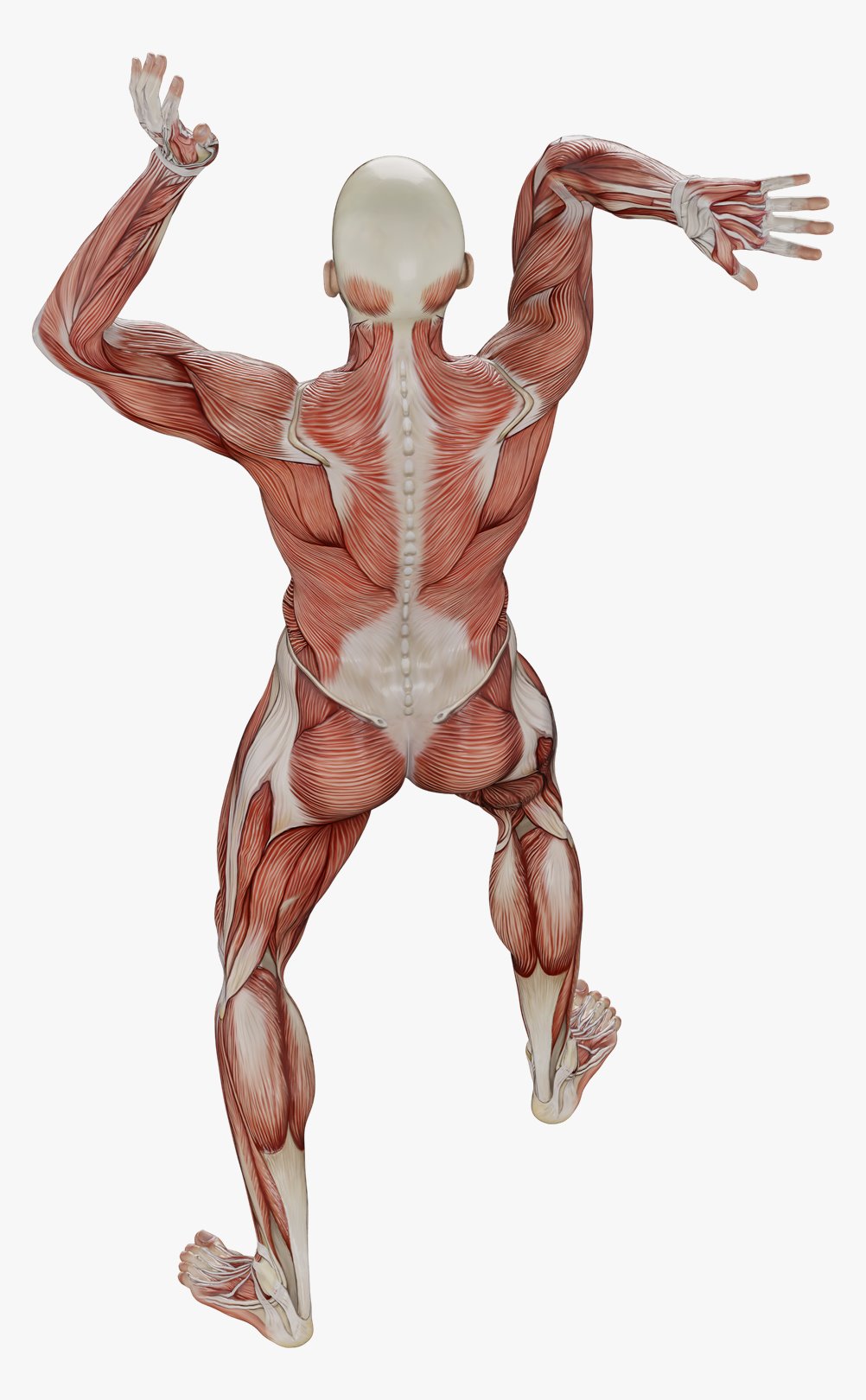
- Holds up the shoulders and the weight of the head all day. Its common trigger points refer to the back of the head and the temple.
- The cap of the shoulder. Tires when the arm hovers over a mouse or a wheel for hours; we work along the fibres, never into the joint.
- Draw the shoulder blades together and down. When you slump they are overstretched rather than short, and the burning between the blades often lives right here.
- Links the arm to the pelvis through the fascia. A stiff lat stops the arm from rising fully overhead and pulls on the lower back.
- Where the lats meet the glutes. The spinal erectors lie beneath it; we reach them through the fascia with slow, long strokes.
- The main hip extensor. When it stays quiet, the lower back takes over, so the low back is treated together with the pelvis.
- Attach to the sitting bones. When they are stiff, the lower back does the forward bend instead of the hip.
- The bottom link of the same chain. Dense and tender after running or a day on your feet, so the pace slows even further here.
Diagram based on a 3D render of the superficial layer, not on a scan of a real person. Deeper muscles such as quadratus lumborum, the suboccipitals and piriformis lie beneath the labelled ones and are not visible here.
How this actually works
No “toxins” and no “energy” — only what really happens in the tissue and in the nervous system.
Massage is mechanical input to tissue and, through the receptors in skin, fascia and muscle, input to the nervous system. Everything that follows comes from two things: the properties of the tissue itself change a little, and how the nervous system judges that area changes a great deal.
Layer by layer: why you cannot go straight to the depth
Under the skin lies the subcutaneous fascia, beneath it the superficial muscles, and beneath those the deeper layers and the attachments to bone. Normally the layers glide against one another. If the top layer is tense, pressure travels through it like pressure through a plank: you will not reach any deeper, but you will bruise the surface. Hence the order of the work — from the top down, with each previous layer giving permission.
| Layer | What is in it | How we work it |
|---|---|---|
| Skin and subcutaneous fascia | Receptors, vessels, the gliding interface | Broad slow forearm strokes, the first 3-5 minutes of an area |
| Superficial muscles | Trapezius, latissimus dorsi, glutes | Pressure along the fibres, pauses on the dense spots |
| Deep layers and attachments | Short muscles along the spine, attachments at the pelvis and the shoulder blade | Point work with the elbow or a knuckle, watching the breath |
Why slowly
Tissue behaves viscoelastically: it resists a fast effort and gives way gradually to a slow, sustained one. On top of that the nervous system needs time of its own: the pain signal and the protective tone do not drop instantly but over tens of seconds under steady pressure. Hence the main rule of the craft: when you find a dense spot, do not press harder, stay longer.
Along the fibres and across them
- Along the fibres — long warming strokes: this is how the overall tone is read and the area is prepared.
- Across the fibres — short movements on one specific dense spot: this is where the line between “dense” and “painful” is felt best.
- At the attachments to bone — almost without movement: pressure, breathing, waiting. These are the most sensitive points of the session, and hurrying them makes no sense.
What the research shows — and what it does not
The honest picture is this. Massage reliably produces a short-term drop in pain intensity and in the subjective sense of tension, and it improves mobility and tolerance of load over the following hours and days. The effect is largely neurophysiological: what changes is not so much the “structure” as the way the nervous system processes signals from that area and how much protective tone it holds there.
- Massage does not “flush out toxins”: the liver and kidneys handle that, and hands cannot influence their work.
- Massage does not lengthen fascia like a rubber band: the human hand physically cannot generate the forces required.
- Massage does not “put vertebrae back” and does not dissolve “salt deposits” — no such deposits exist in muscle.
- Massage does not replace strength work, sleep and a change of posture. Without them the area returns to its previous state within a week or two, and that is not a failure of the technique but ordinary physiology.
The main test of benefit
Fifteen minutes after a session you should feel not merely “softer” but more mobile: the neck turns further, bending forward is easier, the breath goes deeper. If all that changed is a sense of heaviness, the technique was the wrong choice — and that is a reason to change the plan, not to “sit through another couple of sessions”.
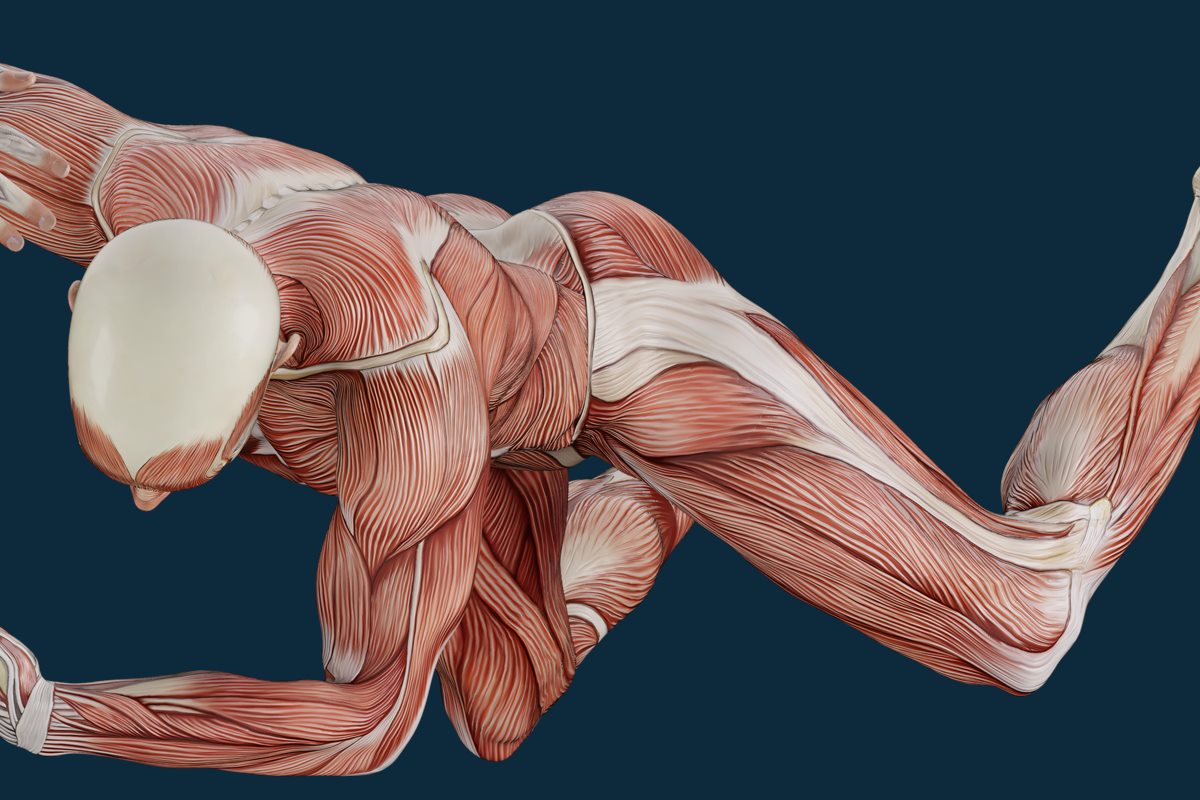
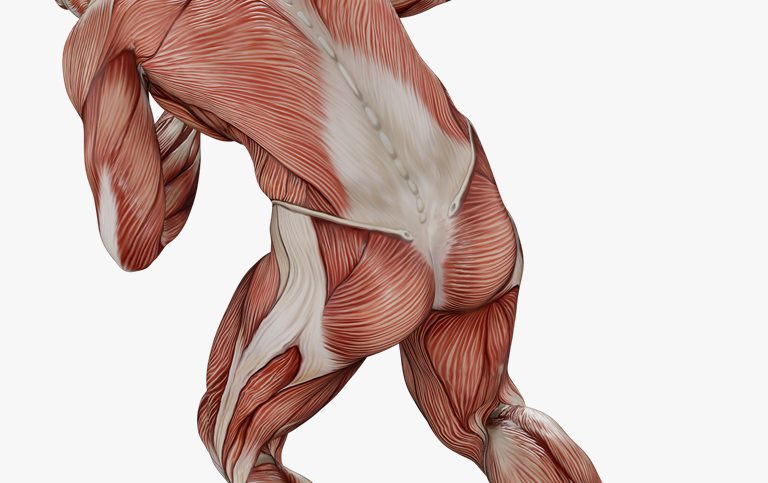
An extended figure from behind: the latissimus dorsi, the glutes and the hamstrings form one continuous chain. This is why the lower back is almost never worked apart from the pelvis.
- Latissimus dorsi (m. latissimus dorsi)
- Glutes (mm. glutei)
- Hamstrings (mm. ischiocrurales)
If a person holds their breath, the pressure is already too much. If they breathe evenly, I can stay longer.
Ale
Where the pressure reaches
A cross-section from skin to bone. Pick a technique to see which layer it actually works on, how fast the hand moves and what does not really happen.
- Skin Touch and pressure receptors. This is where massage first “talks” to the nervous system.
- Subcutaneous tissue and superficial fascia Fat lobules and a thin connective layer that lets the layers glide over one another.
- Superficial muscleOn the way The trapezius or the latissimus, for example. Its fibres run along the section, and long strokes follow them.
- Deep fasciaOn the way A dense sheet between muscle layers; in the lower back it is the thoracolumbar fascia over the spinal erectors.
- Deep muscleTarget The rhomboids under the trapezius, the erectors under the latissimus. The fibres run in another direction, so the section shows bundles.
- Periosteum and boneNot worked A thin, nerve-rich sheath around the bone. Pressure is never aimed here: over bony points the work gets softer, not harder.
Now on the diagram
Deep tissue
Target layer: the deep muscle and its attachments, reached through the superficial layer, one layer at a time
- Tempo
- One to three centimetres per second; on dense spots the hand is almost still.
- Sensation
- A working 6-7 out of 10, “hurts good”. Breathing stays even: if you hold your breath, the pressure is already too much.
- Goal
- Reduce tone and tenderness in a specific area and bring back range of motion.
- What does not happen
- Nobody “reaches the bone”: the periosteum is not pressed into. And adhesions cannot be “broken up” by hand: tissue yields to slow pressure, not to force.
Deep tissue, classic, sports and myofascial release
Four techniques that solve four different tasks. Below are the marks by which they are told apart in practice.
| Parameter | Deep tissue | Classic | Sports | MFR |
|---|---|---|---|---|
| Depth | Layer by layer, down to the deep layers and the attachments | Superficial layers: skin, subcutaneous fascia, the top of the muscle | Medium to deep, targeted at the working muscle groups | Fascia and the superficial layer, without going deep |
| Tempo | Slow: 1-3 cm per second, with long pauses | Medium and rhythmic, continuous | Fast before a load, slower after it | Very slow, with holds of 60-120 seconds |
| Sensation | 6-7 out of 10, “hurts good”, breathing stays even | 2-4 out of 10, comfortable, often makes you sleepy | 4-6 out of 10, varies by area, occasionally sharp | 3-5 out of 10, a pulling, expanding feeling |
| Goal | Lower the tone and soreness of one specific area and restore its range | General relaxation, lower stress | Prepare for a load or speed up recovery after it | Restore the glide of tissue between layers |
| Who it is for | Desk work, chronic neck and lower back tension, heavy “dead” legs | Fatigue, stress, a first experience of massage | Regular training, race preparation and recovery | A feeling of tightness, limited range without clear pain |
| After the session | A day or two of soreness similar to post-training ache | Drowsiness, relaxation, rarely any soreness | Lightness and readiness to train or, on the contrary, a flat evening | Warmth and a sense of more freedom in movement |
In a real session the techniques mix: the warm-up is closer to classic work, the finish is mobilization and stretching. Pure genres do not exist; what matters is that the bulk of the time serves your task rather than a nice-sounding name on a price list.
How a 90-minute session runs
The timing is approximate. If there is one very dense area, the layered part grows at the expense of the warm-up; with several areas, warm-up and mobilisation take longer and each area gets less layered work.
Intake and assessment — 5-10 minutes
What is bothering you, how long for, what makes it worse and what eases it, what your load and posture look like through the day, what medication you take. I watch a few simple movements — bending, turning, raising an arm — to see where range is lost. I do not make diagnoses: if the picture calls for a doctor, we do not start the session.
Warm-up — 10 minutes
Broad slow forearm strokes across the whole area. The point is to raise the temperature of the tissue and let the nervous system get used to the contact. Without this step the deep part is twice as painful for half the result, and it is the one part of the session that cannot be cut short.
Layered work — 45-50 minutes
The main body of the session. I go layer by layer, from the superficial muscles to those beneath them, pausing on the dense spots. Here we keep checking against the scale: a working 6-7 out of 10 and even breathing. The direction is along the fibres first, then across them on specific points.
Trigger points — 10 minutes
Dense painful points that refer into a predictable neighbouring area: from the upper trapezius into the temple and the back of the head, for instance. Pressure is held from twenty to sixty seconds, until the sensation clearly drops, and straight afterwards the area always gets moved.
Mobilization and stretching — 10 minutes
Passive movement in the joint and gentle stretching within the new, now available range. This is needed so the nervous system records the result as a new working range rather than a one-off pleasant sensation. There is no cracking and nothing abrupt here — this is not manual therapy.
Recommendations — 5 minutes
Two or three concrete actions for the next few days: what to change in your working posture, which movement to repeat daily for a minute, which load to put off for a day. I do not hand out lists of twenty exercises — nobody does them anyway.
90 minutes on one scale
The same six stages, drawn to time: half the session or more is layered work, and the firmest pressure takes only ten minutes, close to the end.
- no pressure
- superficial
- moderate
- deep
- deep, on a point
Intake and assessment
- What I do
- I ask what is bothering you and what makes it worse, and watch a few simple movements — bending, turning, raising an arm — to see where range is lost.
- What you feel
- No massage yet: just talking and moving. If the picture calls for a doctor, we do not start the session.
Warm-up
- What I do
- Broad slow forearm strokes across the whole area: I raise the temperature of the tissue and let the nervous system get used to the contact.
- What you feel
- Warmth and pressure that builds but stays gentle. This is the one stage that cannot be cut short.
Layered work
- What I do
- Layer by layer, from the superficial muscles to those beneath them, pausing on the dense spots. Along the fibres first, then across them on specific points.
- What you feel
- A working 6-7 out of 10 and even breathing — we keep checking against that scale the whole time.
Trigger points
- What I do
- I hold pressure on a dense point for twenty to sixty seconds — until the sensation clearly drops — and straight afterwards the area gets moved.
- What you feel
- A familiar referral into a neighbouring area: from the upper trapezius into the temple and the back of the head, for instance.
Mobilization and stretching
- What I do
- Passive movement in the joint and gentle stretching within the new, now available range.
- What you feel
- The pressure eases off. No cracking and nothing abrupt — this is not manual therapy.
Recommendations
- What I do
- Two or three concrete actions for the next few days: what to change in your working posture, which movement to repeat for a minute, which load to put off for a day.
- What you feel
- No pressure. There will be no list of twenty exercises — nobody does them anyway.
Stages are drawn at the middle of their range: intake takes 5-10 minutes, and the start of the layered work (45-50 minutes) shifts by the same amount. With one very dense area, the layered part grows at the expense of the warm-up; with several areas, warm-up and mobilisation take longer and each area gets less layered work. The session still lasts 90 minutes.
Where layered work pays off most
Four regions in which deep tissue makes the most noticeable difference — and the ones people ask about most often.
Neck and shoulders
The classic of desk work: the head sits forward and the upper trapezius holds its weight for hours. Deeper down lie the short suboccipitals (mm. suboccipitales) — invisible on a surface view, yet they are often the source of that “helmet” feeling at the base of the skull. We work slowly and only on the back and the side of the neck: the front of the neck is never pressed at all, the vessels are there.
Lower back and thoracolumbar fascia
The thoracolumbar fascia is a crossroads where the latissimus arrives from above and the glutes from below. That is why the lower back is almost never worked in isolation: if the pelvis stays stiff, the lower back gets back everything we took off it. Deeper than the fascia lies the quadratus lumborum (m. quadratus lumborum, QL) — not visible on a surface view, yet it gives soreness to the side, above the crest of the pelvis, and it is regularly mistaken for the erectors.
Pelvis and gluteal area
The area with the most noticeable effect in runners and in people who sit a lot. Under the gluteus maximus lie the gluteus medius and minimus (m. gluteus medius, m. gluteus minimus), and deep in the pelvis the piriformis (m. piriformis); a surface view does not show them, yet the dull ache at the side of the pelvis and deep in the buttock usually comes from them. Separately and plainly: shooting pain down the leg, numbness or weakness in the foot belongs to a doctor, not to a massage therapist.
The outside of the thigh
The ITB is not a muscle but a dense fascial band, and no hand or foam roller can “stretch” or “roll it out” — worth knowing before you buy one. The work has a different point: taking excess tone off what weaves into the band — the tensor fasciae latae (m. tensor fasciae latae, TFL) and the vastus lateralis (m. vastus lateralis). Sensation here is sharper than on the back, so the tempo drops even further.
Does it hurt, and what happens afterwards
The two questions asked most often. Answered without any heroics.
The working scale: 6-7 out of 10
Picture a scale where zero is barely feeling the touch and ten is unbearable. The working range for deep tissue is 6-7. It is that “hurts good” feeling: the body recognizes the area, you want to exhale but you do not want to pull away. Anything above seven does not speed up the result: protective tension switches on, and the next ten minutes go on undoing it.
Breathing is the main indicator
As long as you breathe evenly, the pressure is right. The moment you hold your breath, tighten your belly or start breathing high in your chest, the pressure is already too much and I ease it, even if you say it is bearable. “Grit your teeth if it hurts” is not what deep tissue is about.
What is normal and what is not
- Normal: a dull deep sensation under the hand, warmth, the urge to exhale, a recognizable “good soreness” in one specific point.
- Normal: soreness that refers into a predictable neighbouring area and fades within 20-40 seconds under steady pressure.
- Not normal: sharp, cutting or burning pain — a sign that the pressure landed in the wrong place or arrived too fast.
- Not normal: shooting pain, numbness, pins and needles or an electric feeling down the arm or leg. In that case I lift my hands immediately and we leave that area alone.
- Not normal: nausea, dizziness, cold sweat. We stop, you sit up, water, and then we decide by how you feel.
You can stop the session at any moment and without explaining yourself — the word “stop” is enough. That does not mean “ruining the session”: feedback is the working tool, and without it I am working blind.
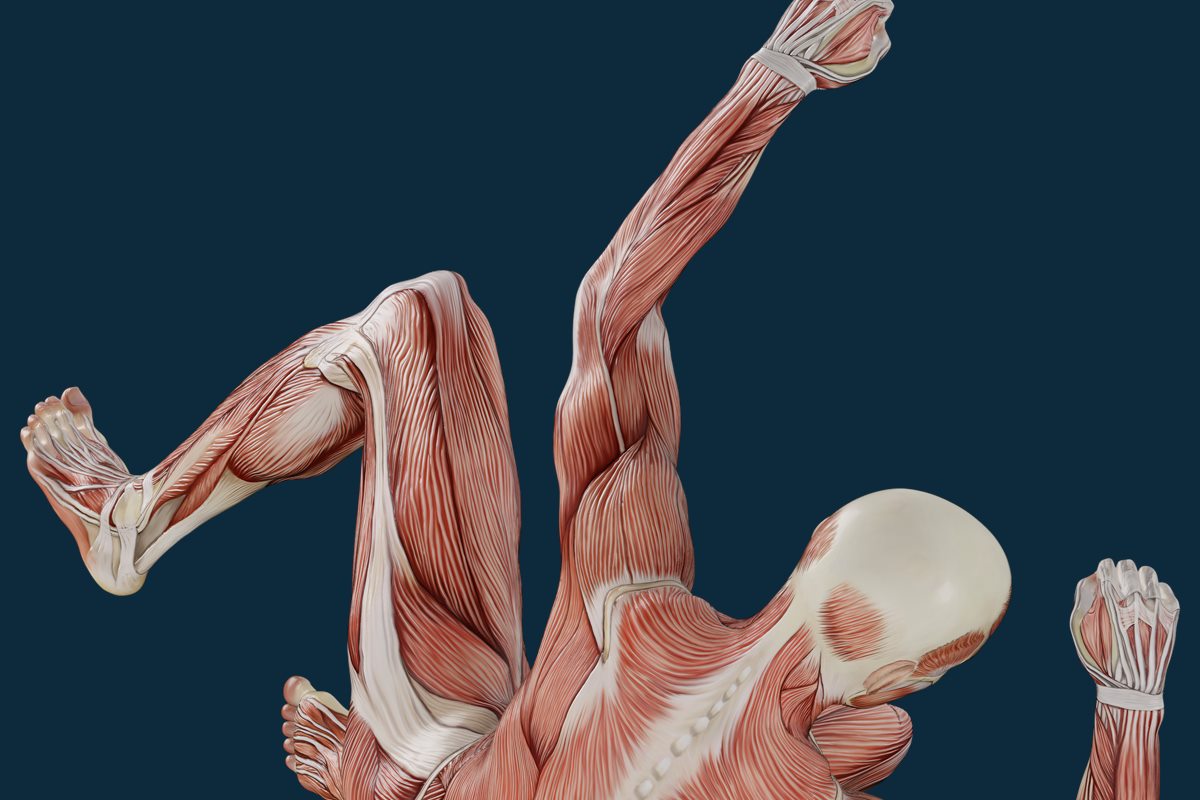
A rotated position seen from the back: the trapezius, the latissimus and the erector spinae — three layers that on a dense back are worked one after another, not in a single push.
- Trapezius (m. trapezius)
- Latissimus dorsi (m. latissimus dorsi)
- Erector spinae (m. erector spinae)
- Glutes (mm. glutei)
The first 48 hours after a session
After deep work there is often soreness much like the ache after unfamiliar training: it arrives in 6-12 hours, lasts a day or at most two, and passes on its own. That is a normal response to a new mechanical load, not “toxins coming out”. If the soreness is stronger than after an ordinary workout, or lasts more than two days, we lower the intensity at the next session — that happens too.
- Water — drink as you normally would. An extra two litres does not “flush” anything, but people often genuinely feel thirsty after a session, and that is fine.
- Warmth — a warm shower in the evening helps. A hot bath, a steam room or a sauna in the first hours increases the soreness; better to leave them for the next day.
- Load — on the day of the session walking and light mobility work are enough. Heavy sets, intervals and races come 24-48 hours later, otherwise two kinds of soreness overlap and you cannot tell which is which.
- Movement — the most important part: a new range is kept only by using it. Two or three times a day, for a minute, repeat the movement we went through at the end of the session.
- Bruises — not a sign of good work but a sign that pressure rose too quickly. The odd spot is possible in people with thin skin or on medication that affects clotting, but we agree on that in advance.
The 0–10 scale: where the working zone is and how your breathing shows it
Move the slider. For every level: what you feel, what is happening under the hand at that moment, and the three signs that tell you the pressure is right.
6out of 10
The deep tissue working zone
- What you feel
- That “hurts good” feeling: the body recognises the area, you want to exhale but you do not want to pull away.
- What the therapist does
- Not pressing harder but staying longer: under steady pressure the sensation fades within 20-40 seconds. Most of the session happens here, checking in with you on the scale.
Three signs the pressure is right
- Breathing is evenin and out without pauses or jerks, belly soft yes
- Face and shoulders are relaxedno frowning, shoulders not creeping to the ears, fists not clenched yes
- The muscle is not “guarding”the tissue gives under the hand instead of hardening against it yes
Breathing is the main indicator
Breathing evenly means the pressure is right. In for about 4 seconds, out for about 6.
At 9–10 there is no point breathing to a rhythm: first the pressure comes back down to the working range.
Breathe in through the nose for a count of four, out for a count of six — the out-breath longer than the in-breath. Five or six of these cycles and the shoulders drop on their own.
The scale is subjective: the numbers describe your sensations, not the force applied, and the same pressure can be a 5 for one person and an 8 for another. The 4/6 rhythm is a guide to calm breathing with a long out-breath, not a norm. A diagram, not a measurement. You can say “stop” at any moment and without explaining yourself.
When a session does not take place
Massage is not medical care. I do not make diagnoses and I do not prescribe anything. Some conditions mean “not today”, others mean “possible, but done differently and after a conversation with your doctor”.
No session
- Fever, a respiratory infection, any acute infectious condition — even if it is “nearly over”.
- Acute inflammation in the working area: redness, swelling, local heat.
- Thrombosis and thrombophlebitis, including in your history — no work without written clearance from a doctor.
- Fresh injuries, fractures, torn ligaments or muscles, recent surgery in the working area.
- Skin infections, purulent processes, a flare of eczema or psoriasis, open wounds in the working area.
- Uncontrolled high blood pressure, or a hypertensive crisis in recent days.
- Intoxication from alcohol or drugs — the session does not take place under any circumstances.
- Acute pain with numbness or weakness in an arm or a leg, a sudden seizing up with loss of sensation — a doctor first, massage can wait.
We work, but differently — and after a conversation with your doctor
- Cancer, including remission — only in agreement with your treating doctor, with a gentle technique and no deep work.
- Anticoagulants and other medication affecting clotting — no deep pressure is used.
- Varicose veins — we work around the area; in pronounced cases the legs are not worked at all.
- Pregnancy at any stage — this calls for a specialist in prenatal massage; deep tissue is not used in that case.
- Osteoporosis and long-term corticosteroid use — pressure is reduced and bony prominences are avoided.
- Diabetes with impaired sensation — a person may not feel excessive pressure, so we go deliberately gentler.
- Disc herniation and protrusion — we work the muscles around, with no pressure on the spine and no “adjustments”.
- Low blood pressure and a tendency to faint — we get off the table slowly, with water and a couple of minutes sitting at the end.
- Fresh tattoos and burns, sunburn included — the area is left alone until it has fully healed.
If you take medication regularly or are under a doctor’s care, tell me when you book rather than once you are on the table: pressure, tempo and the choice of areas all depend on it. Massage does not replace a medical consultation and is not medical care. The full list of questions is on the FAQ page.
Common questions about deep tissue
Eight questions that come up in almost every conversation before a first session.
What a session with a visit costs
The price includes travel across Area Metropolitana de Barcelona, the table, linens, oil and the time for intake and recommendations. There is no separate line here “for a consultation”.
60 minutes
One area: neck and upper back, or lower back and pelvis.
55€
per session- A short intake and warm-up of the area
- Layered work on one region, around 30 minutes
- Trigger points and a closing stretch
- A maintenance format between the longer sessions
90 minutes
The working standard: the whole back plus a neighbouring area.
85€
per session- Full intake, movement assessment, warm-up
- Layered work for 45-50 minutes across two regions
- Trigger points, mobilization and stretching
- Two or three concrete recommendations for the coming days
- The best choice for a first session
120 minutes
Back, pelvis and legs in full, or a reset after a long flight and a competition.
105€
per session- Three or more regions in a single visit
- Dedicated time for the feet, calf and hamstrings
- An extended block of mobilization and stretching
- A format for runners, cyclists and after a long journey
| Express session, 30 minutes | {{PRICE_EXPRESS}} | One area, worked precisely — neck or lower back. For regular clients and as an addition to a main session. |
|---|---|---|
| Pass for 5 sessions | 250€ | For a series, when an area is badly neglected and needs a course rather than a single visit. The validity period is agreed at purchase. |
| Pass for 10 sessions | 450€ | A format for regular support: the schedule is put together for the whole pass at once. |
| Travel beyond Area Metropolitana de Barcelona | 100€ | Depends on the distance; I name the exact amount before confirming the booking. No extra charges on the spot. |
| Session outside working hours | {{PRICE_NIGHT}} | Outside 09:00–21:00 — by prior arrangement and if a slot is free. |
| Session in a hotel | 100€ | Covers parking and the walk through reception. It is worth checking with the hotel in advance that a visiting therapist is allowed. |
| Format for two | 140€ | Two people one after another at the same address. Working on both at once is not possible — there is one therapist. |
Payment after the session, in cash or by transfer. If your plans change, let me know in advance: a visit takes up the whole slot, and giving it to someone else at the last minute is no longer possible. The full price list for every technique is on the prices page.
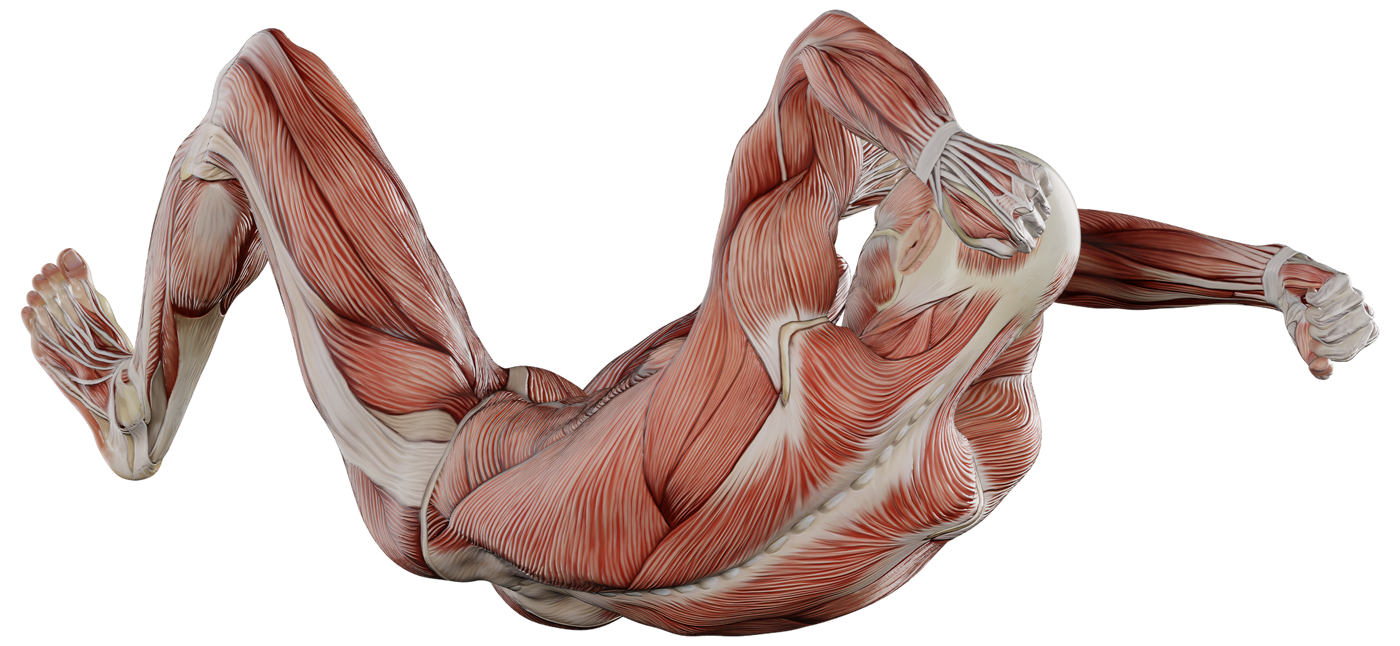
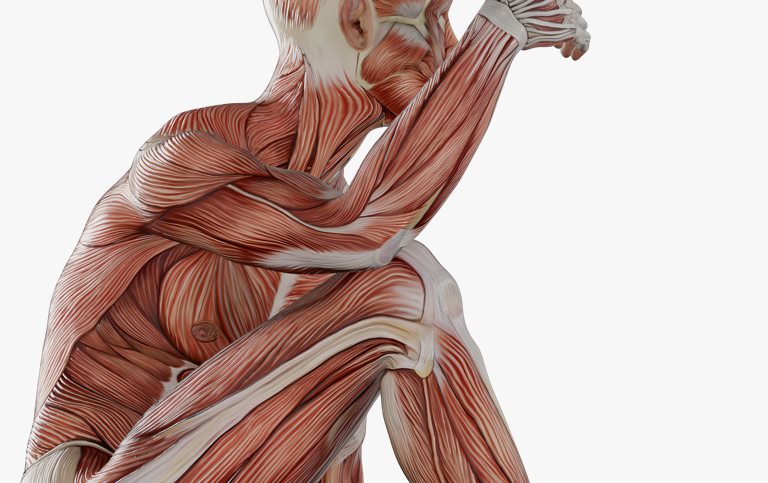
A tucked position shortens the entire posterior chain, from the back down to the calves. This is roughly how the body spends a working day in an office chair. Erector spinae (m. erector spinae) · Glutes (mm. glutei) · Hamstrings (mm. ischiocrurales) · Gastrocnemius (m. gastrocnemius)
Book a deep tissue massage with a visit
Write and tell me what is bothering you and for how long. I will say whether deep tissue suits your case, suggest a length — and tell you honestly if you need a doctor first. Visits across Area Metropolitana de Barcelona, working hours 09:00–21:00.