Why your back hurts when you sit for eight hours
Lower back pain by the end of the day rarely begins in the lower back. The mechanics of a seated day: iliopsoas, quadratus lumborum, the glutes, the thoracic spine and the suboccipitals.

Deep tissue massage that comes to you
The most common sentence at a first session is “my back hurts”. A dozen different stories hide behind it: one person has a shortened pectoralis minor (m. pectoralis minor) and a shoulder that has drifted forward, another has an overloaded quadratus lumborum (m. quadratus lumborum, QL) after moving house, and for a third the pain under the shoulder blade is actually coming from the neck. These texts exist so that a specific area becomes visible behind a general word.
Pain rarely lives where you point your finger. A muscle can ache away from its source, refer into the arm, the head or the buttock — and stay silent exactly where it is genuinely overloaded. That is why every piece is built the same way: what this area is, what job it does in your day, why it stopped coping, how it is recognized by hand, and what changes after a session and between sessions.
I do not write about “releasing blockages” or “flushing things out”: no such processes happen in tissue. I write about mechanics — the length and tone of a muscle, the glide of fascial layers, the range of a joint, the habitual posture and the load that locked that posture in. Where the data is thin and specialists disagree (around the iliotibial band, for instance — a dense fascial structure rather than a muscle, and one you cannot “stretch” with your hands), I say so, instead of inventing a tidy explanation.
Massage is not medical care. I do not make diagnoses and I prescribe nothing, and articles do not replace an examination by a doctor. If there is acute pain, a fresh injury, numbness or weakness in an arm or a leg, a shooting episode with loss of sensation, fever or signs of inflammation — a doctor first, and hands only after that. The full list of contraindications and of situations where a session has to wait is collected in the frequently asked questions.
If a text leaves you with a question about your own back, it is easier to ask it by message: {{WHATSAPP}} or {{TELEGRAM}}. I answer personally, without scripts, and I am comfortable saying “this one is not for me” when a case is not mine.
Five texts that most often answer the questions people have before a first session: the desk-bound back, the difference between techniques, trigger points, fascia and mobility, and muscle soreness after a load.
Lower back pain by the end of the day rarely begins in the lower back. The mechanics of a seated day: iliopsoas, quadratus lumborum, the glutes, the thoracic spine and the suboccipitals.
How deep tissue massage differs from classic work in depth, pace and purpose, when each of them is the better fit, and why “more painful” does not mean “more effective”.
A temple aching from the neck, “sciatica” coming from a glute: how trigger points refer pain, and where the method stops.
What fascia is, why the body feels rusted after a long sit, what hands change in the tissue and what they cannot, and how myofascial release differs from deep tissue.
Delayed soreness arrives a day after unaccustomed effort — and it is not lactic acid. The mechanism, the evidence on massage and DOMS, and the best window for a session.
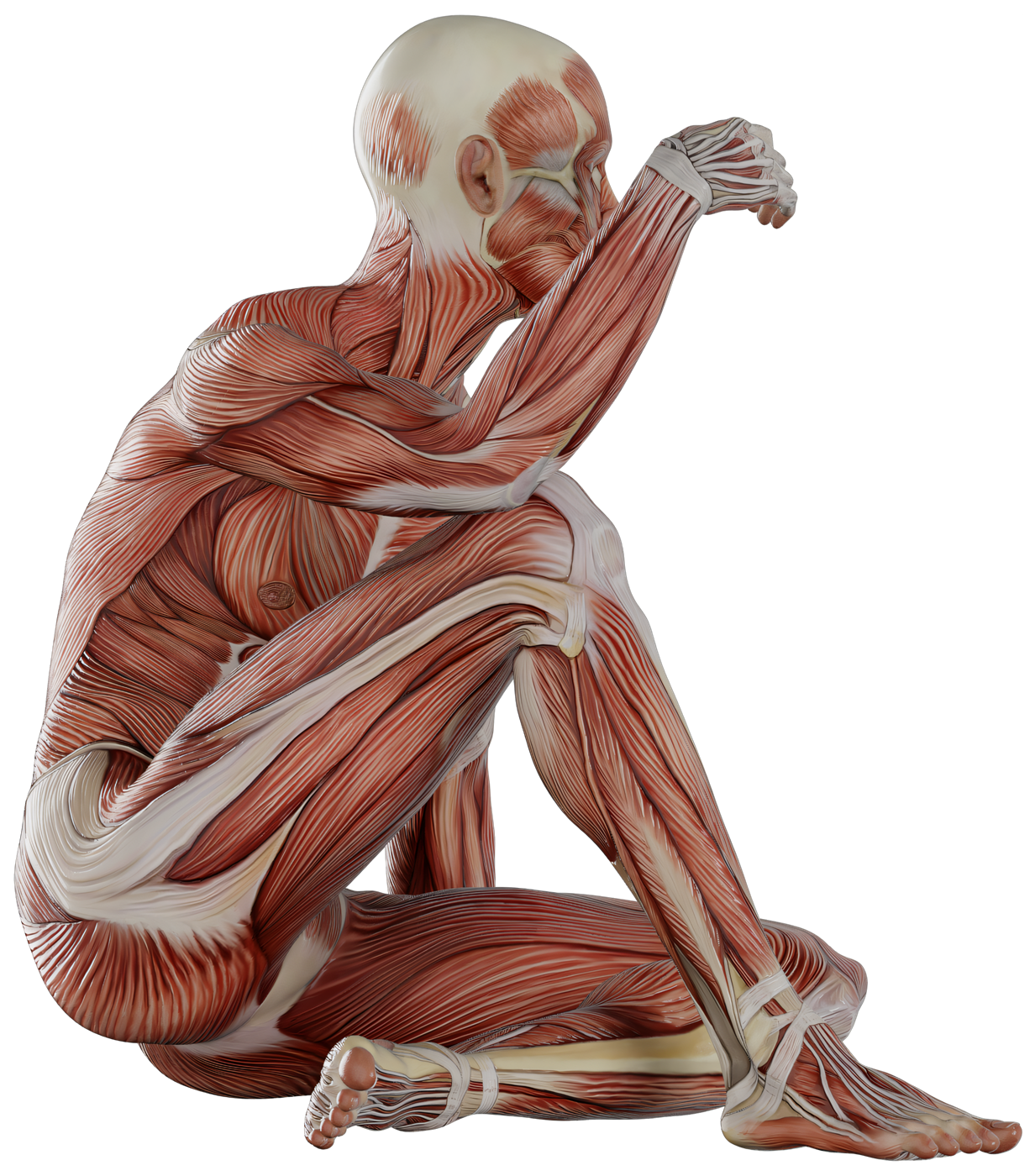
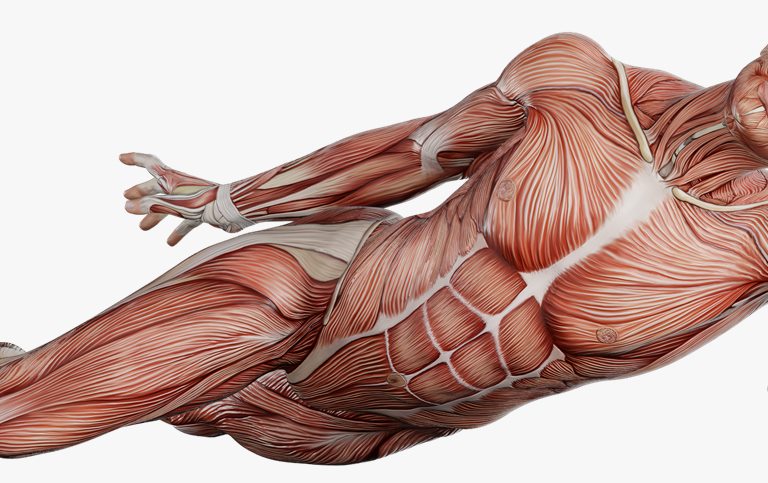
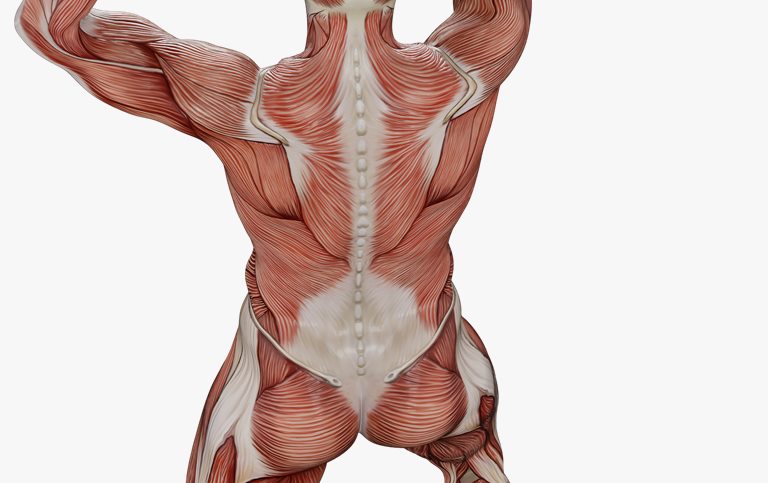
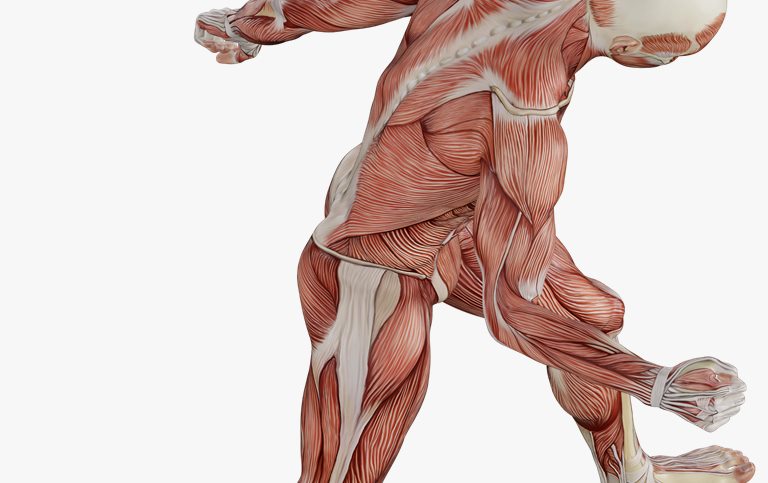
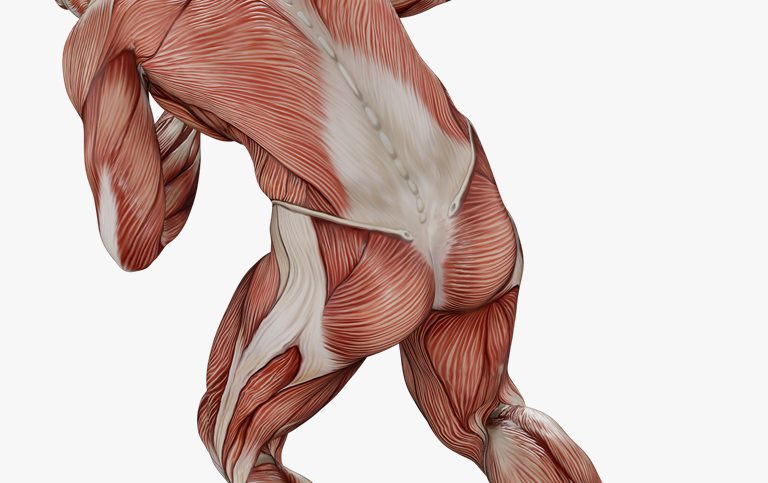
The laptop posture in anatomical terms: the neck carried forward, the upper trapezius holding the weight of the head, the erector spinae never off duty. Upper trapezius (m. trapezius, pars descendens) · Deltoid (m. deltoideus) · Erector spinae (m. erector spinae) · Glutes (mm. glutei)
A text explains the mechanics, but the area is still found by palpation. In a session I will check where exactly the shortening is and what limits the movement, show you the difference in range before and after, and give you two or three things to do over the week. Sessions at the studio at Balmes 200, plus visits to homes, hotels and offices — districts Area Metropolitana de Barcelona, working hours 09:00–21:00.