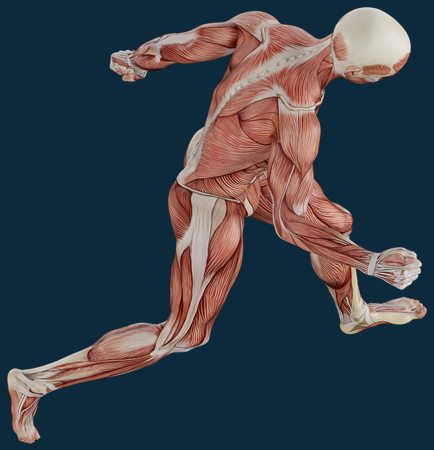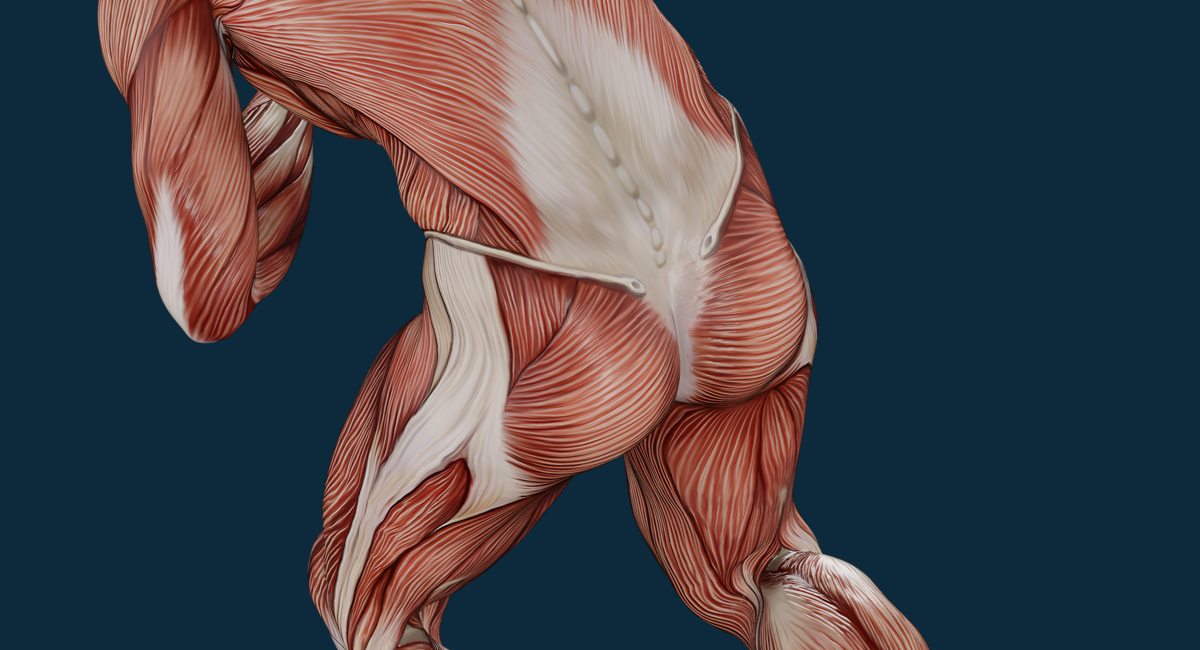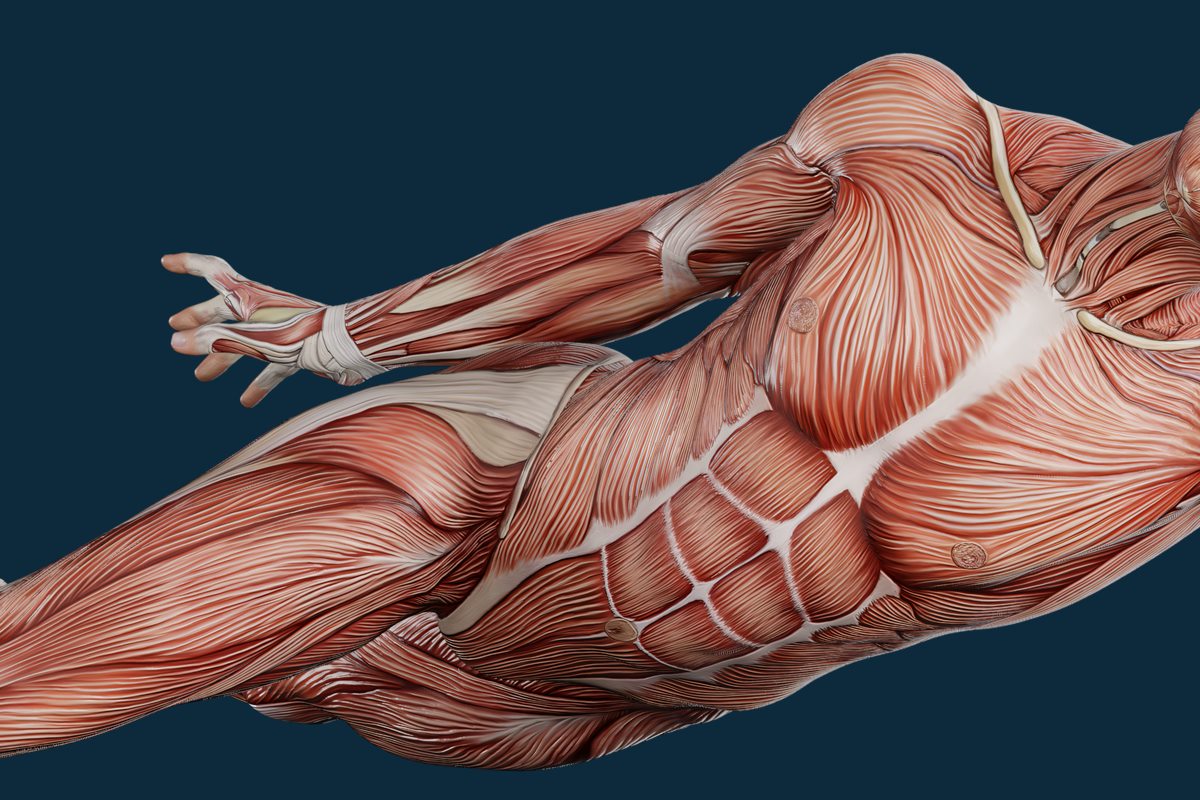
The front of the body: pectorals, abdominals and quadriceps. A short front side is a common reason the back hurts at the back.
- Pectoralis major (m. pectoralis major)
- Rectus abdominis (m. rectus abdominis)
- External oblique (m. obliquus externus abdominis)
- Serratus anterior (m. serratus anterior)
- Quadriceps (m. quadriceps femoris)
- Biceps brachii (m. biceps brachii)
The question “which massage should I book” usually sounds like a choice between “pleasant” and “effective”. In reality it is a choice between two different jobs: one of them tunes the nervous system down, the other gives a specific muscle back its length and its movement. Below: how they differ physically, who each one suits, why “more painful” is not the same as “better”, and how to describe your complaint so that the hour is not spent guessing.
The difference is the goal, not the force
Classic and deep tissue massage are usually described as “gentle” and “strong”. That is a convenient shorthand, but it is not accurate. What separates them is the goal; pressure, pace and depth follow from the goal rather than define it.
Tissue cross-section
Tissue cross-section: where the pressure reaches
- Skin
- Subcutis and fascia
- Superficial muscle
- Deep fascia
- Deep muscle
- Periosteum and bone
Deep tissue down to the deep muscle through the superficial layer; 1-3 cm per second, 6-7 out of 10, even breathing.
Diagram, not to scale. Tempo and the scale are the site’s working guidelines, not measurements.
Classic technique is addressed to the skin, the layer beneath it and the superficial muscles — and through them to the nervous system. Long gliding strokes, an even rhythm, predictability. The body stops bracing for something unexpected, the breath lengthens, overall tone drops. That is not a poetic metaphor: the brain receives a large stream of monotonous, safe information from the skin and gradually lowers its readiness to defend. Hence the drowsiness towards the end of a session and the feeling of having been switched off.
Deep tissue massage is addressed to a specific muscle and a specific layer. The therapist does not “press the back down” — they find, for example, levator scapulae (m. levator scapulae) where it attaches to the upper angle of the shoulder blade, and work slowly, along the fibres and across them, until the tissue starts to give. Speed matters here on principle: fast strong pressure provokes a protective contraction, slow pressure gives the tissue time to let go. This is why deep work looks boring from the outside: the therapist stays in one place for a long time and barely seems to move.
That also changes the arithmetic of a session. In an hour of classic work you can genuinely cover the whole body. In an hour of deep tissue work you can honestly close two or three areas: the neck and shoulders with the upper back; or the lower back, the glutes and the back of the thigh. Trying to do “everything, and deeply” in sixty minutes turns into fast strong work — the worst of both options: the tissue guards more, and nothing changes.
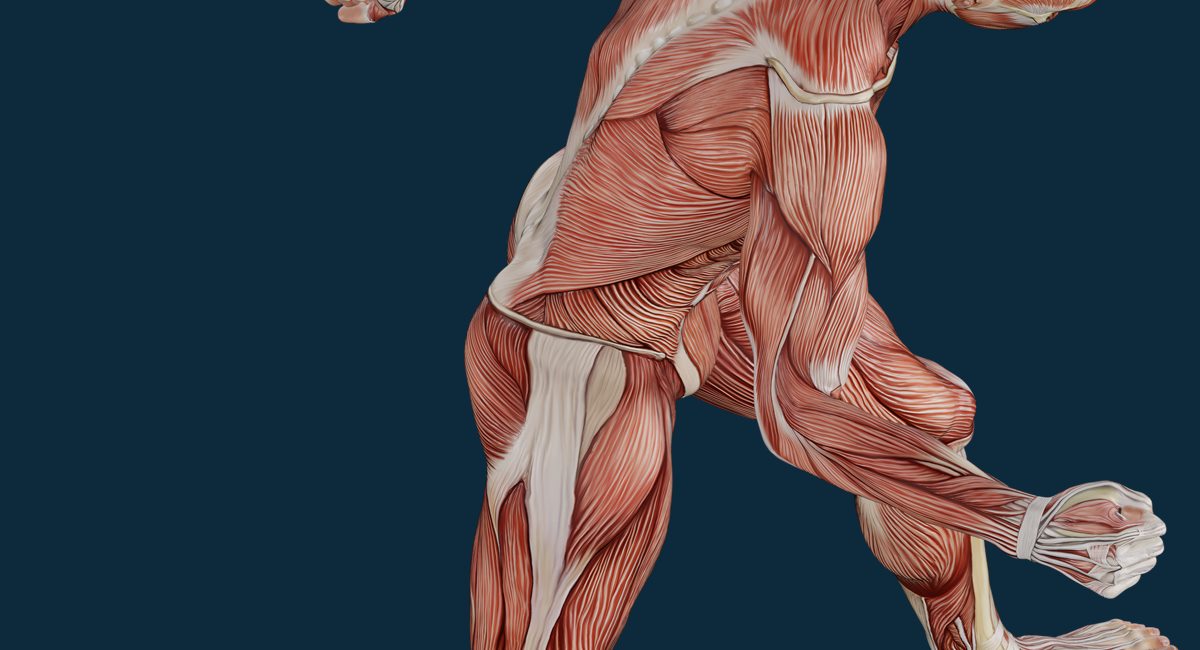
Front view. Desk work has a front half that rarely gets any attention: pectoralis major (m. pectoralis major), serratus anterior (m. serratus anterior), rectus abdominis (m. rectus abdominis) and the obliques. When the shoulder has travelled forward, the back pulls not because it is weak, but because it is being pulled from here.
- Pectoralis major (m. pectoralis major)
- Rectus abdominis (m. rectus abdominis)
- External oblique (m. obliquus externus abdominis)
- Serratus anterior (m. serratus anterior)
- Quadriceps (m. quadriceps femoris)
- Biceps brachii (m. biceps brachii)
| Parameter | Classic massage | Deep tissue massage |
|---|---|---|
| Goal | Lower overall tone, move the body into recovery mode | Give a specific muscle and its layer back their length and mobility |
| Depth | Skin, the layer beneath it, superficial muscles | Mid and deep layers, attachment sites, the muscle-to-tendon junction |
| Pace | Even, long gliding strokes | Slow, with pauses; pressure builds and is then held |
| Coverage in an hour | The whole body, or one large half of it | Two or three areas, the rest only if time is left |
| How it feels | Pleasant, sometimes on the edge of sleep | The recognizable “that is the spot”, discomfort 6-7 out of 10, breathing steady |
| Straight afterwards | Relaxed, sleepy | Freer movement plus possible heaviness in the area worked |
| The next day | Usually nothing | Sometimes soreness, like after an unfamiliar workout, for 1-2 days |
| How often | Limited only by comfort and budget | Every 7-14 days in the active phase, less often after that |
How the session feels, and how the next day feels
A classic session feels even. The pressure is there, but it does not ask for your attention. You can let your mind wander, you can doze off. Towards the end there is often a heaviness in the arms and legs and no wish to get up at all — that is the working effect, not a side effect.
Deep tissue work feels different. The main sign that the spot has been found is not pain but recognition: “yes, that is mine”. Sometimes the sensation travels away from the point of pressure — from the upper trapezius (m. trapezius, descending part) into the base of the skull, for instance, or from the gluteal area into the back of the thigh. That is a normal property of overloaded tissue, and it is exactly what tells the therapist the area was located correctly. Between passes the area usually grows warmer and starts to feel wider than it did.
The after-effects differ too. After classic work there is usually nothing by morning except a well-slept night. After deep work there can be soreness in the area that was worked: much like muscles a day after unfamiliar exertion, it lasts a day or two and is easily handled by walking and a warm shower. That is acceptable. What is not acceptable: bruises, pain that keeps you awake, and the sense that the area is worse than it was before the session. That means the pressure was chosen wrongly, and next time it is lowered rather than “got used to”.
On drinking water after a session: it is sensible simply because it is a good habit, not because massage “flushes” anything out of anywhere. No such process takes place in the tissues, and there is no need to explain the after-effects with it.
When classic work fits better, and when deep work does
Classic massage — if
- The main complaint is not “it hurts here” but “I am wrung out”: shallow sleep, a body that will not switch off in the evening, irritability by Thursday.
- This is your first massage ever, or the first in several years. Neither you nor the therapist knows your threshold yet — it is wiser to start with something predictable.
- The session falls on the day of a race or a hard training session: deep work immediately before a load temporarily reduces a muscle’s readiness to produce force.
- Your tissues are sensitive right now — after an illness, on too little sleep, or under heavy stress that is already keeping your tone up on its own.
- You simply want a calm hour without anyone exploring tender areas. That is a perfectly valid request in its own right and needs no justification.
Deep tissue — if
- The tension is chronic and has an address: the same spot between the shoulder blade and the spine, one side of the neck, one glute. One-sidedness almost always means a habitual load rather than “general fatigue”.
- You work at a desk. After eight hours at a laptop it is not “the neck” in general that is short: it is the suboccipitals (mm. suboccipitales), the upper trapezius, and pectoralis minor (m. pectoralis minor), which pulls the shoulder forward and leaves the back to take the blame.
- You train with a repeating movement pattern — running, cycling, rowing, the weights room. It builds up predictably: the hamstrings, gastrocnemius (m. gastrocnemius) and soleus (m. soleus), the glutes.
- Your range of motion is limited: your head turns worse to one side than the other; your arm will not reach behind your back; you cannot squat deep without your lower back rounding.
- Classic work has stopped holding. A pleasant hour, and by the evening everything is back. That usually means you are taking off the superficial layer while the shortening lives deeper down.
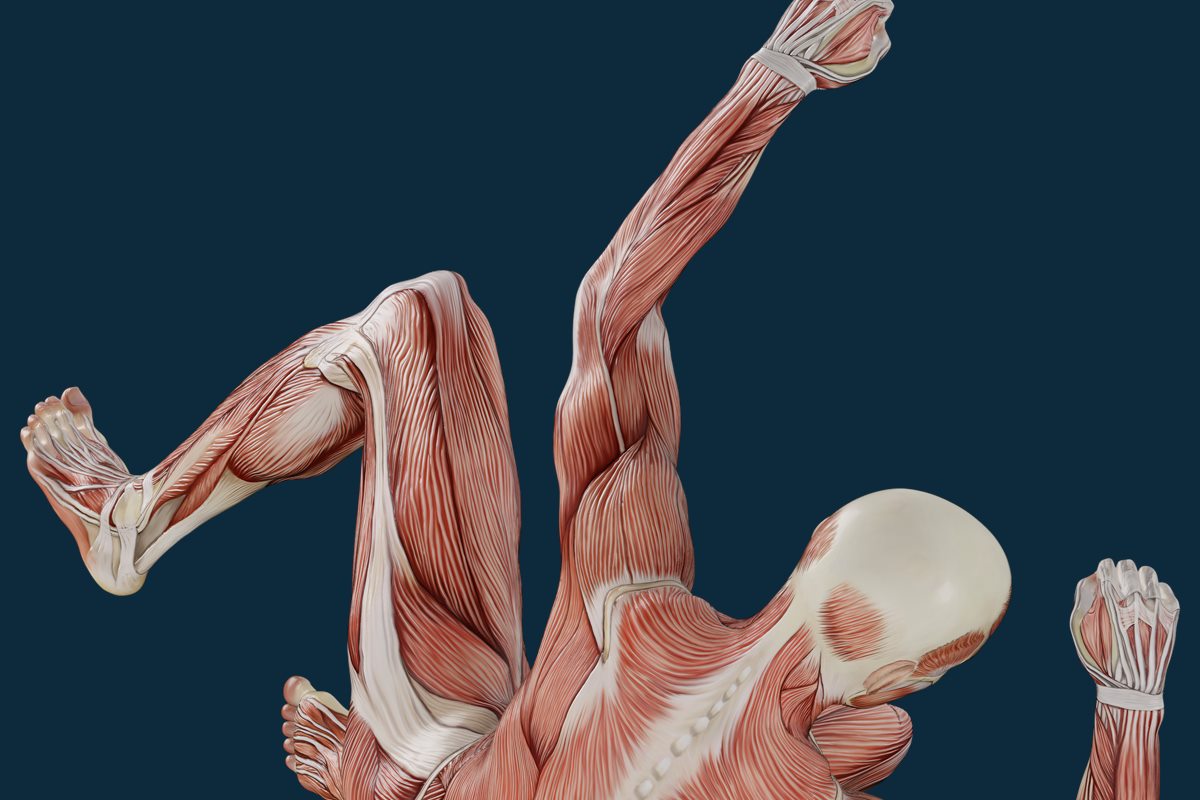
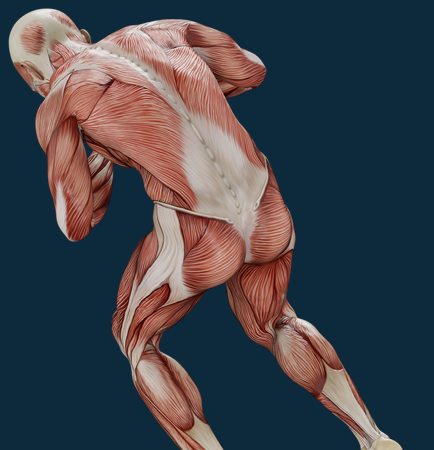
A twisted position, the back in close-up: trapezius, latissimus dorsi (m. latissimus dorsi), the erector spinae (m. erector spinae) and the glutes. It shows the main point — the “back” is not a flat surface but several layers running at different angles. Deep work is addressed to a layer, not to an area of skin.
- Trapezius (m. trapezius)
- Latissimus dorsi (m. latissimus dorsi)
- Erector spinae (m. erector spinae)
- Glutes (mm. glutei)
The right answer is often not either-or. Most of my sessions are built like this: 10-15 minutes of even preparatory work so that the tissue stops guarding, then 30-40 minutes of deep work across two areas, and a calm finish back at the earlier even pace. Starting deep straight away is roughly like deadlifting without a warm-up: technically possible, practically unwise.
There is a practical criterion as well: how much time you have and what kind of day this is. If there is an important meeting or a training session in the evening, take the even session. If the weekend is ahead and you are ready for possible soreness the next day, this is a good moment for deep work.
The myth: the more it hurts, the better it works
This myth has a grain of truth in it, which is why it survives. Working on an overloaded area really is rarely neutral: where a muscle is short and irritated, pressure is felt distinctly. The trouble starts when that becomes “so I have to put up with it” and the quality of a session gets measured in units of pain.
The mechanics are simple, and they work against you. Strong pain is a danger signal, and the body answers it with a protective contraction: the muscle under the hand gets stiffer, the breath is held, the shoulders lift. At that moment the therapist is no longer pressing into relaxed tissue but into tissue that is pushing back. From there it goes one of two ways: either the pressure climbs until there are bruises, or the hour is spent for nothing. Neither way adds any mobility.
This is why the scale is agreed out loud, before anything starts. The working range is roughly 6-7 out of 10: clearly felt, your attention held by the area, but you stay present and able to talk. A simple practical marker: if you can breathe, the pressure is right. The moment you hold your breath, clench your jaw, tense your foot or instinctively pull away, the pressure comes down. Not “it will ease in ten seconds” — immediately.

Enduring is not a technique. If a session requires endurance, then we have picked the wrong depth, the wrong pace or the wrong area.
Ale
This is also the place to be honest about the evidence. The mechanisms of deep tissue work are studied less well than one would like, and some of the familiar explanations do not survive scrutiny. Phrases like “breaking up adhesions” or “lengthening fascia with the hands” sit badly with what is known about the strength of these tissues: hand force is simply not enough to stretch dense fascia mechanically. It is more plausible that a good part of the effect is neurophysiological: tone changes through the nervous system, tolerance to pressure changes, and so does the movement pattern you choose after the session. The effect itself is real and testable — by range of motion before and after, by the way you turn your head as you get up from the table. The explanation for it is simply a different one.
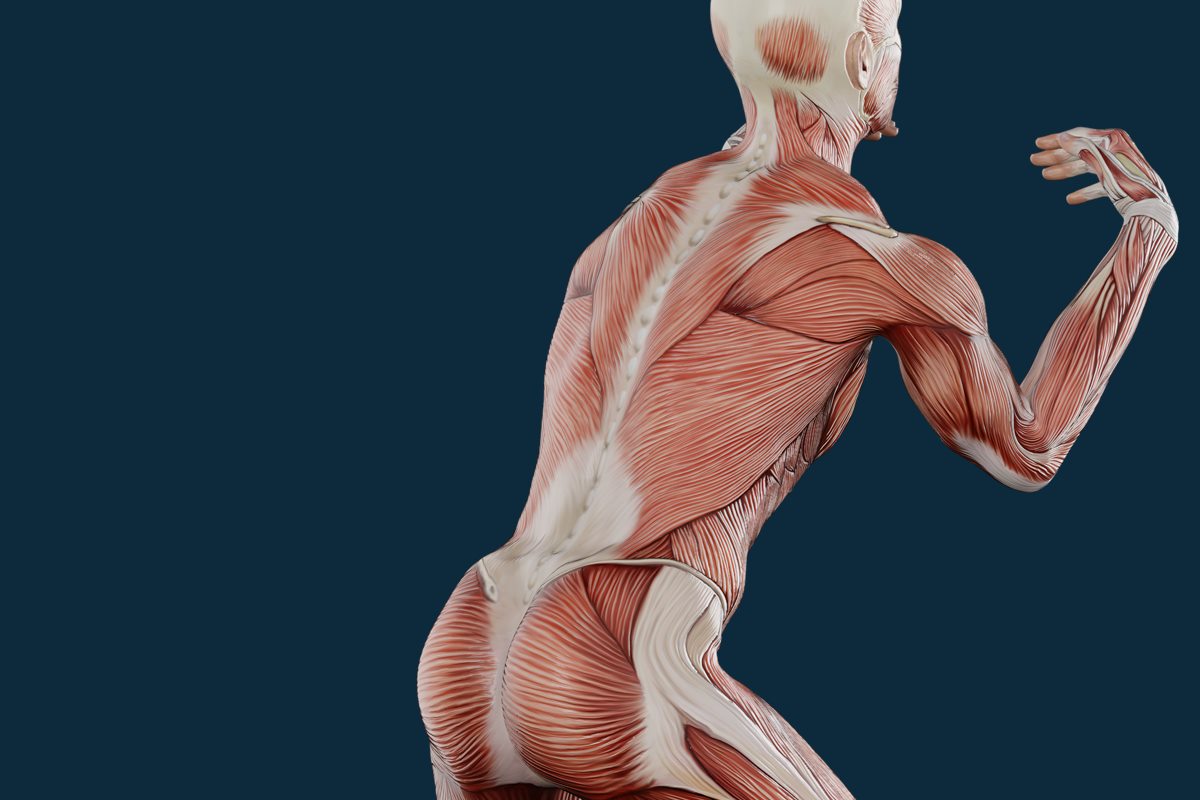
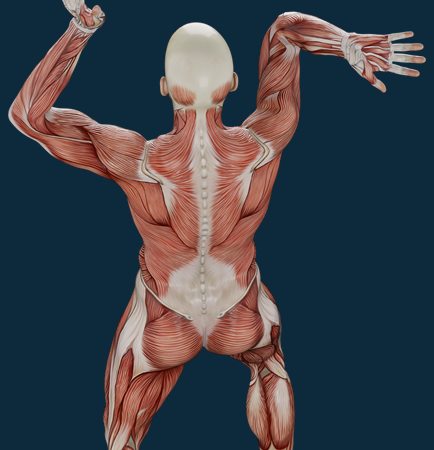
Rear view, torso turned: trapezius, the deltoid (m. deltoideus), latissimus dorsi, the erector spinae, the glutes and the iliotibial band (tractus iliotibialis) down the outside of the thigh. The band is a dense sheet of fascia, not a muscle, and it cannot be “stretched” by hand; the work goes to the muscles that tension it.
- Trapezius (m. trapezius)
- Deltoid (m. deltoideus)
- Latissimus dorsi (m. latissimus dorsi)
- Erector spinae (m. erector spinae)
- Glutes (mm. glutei)
- Iliotibial band (tractus iliotibialis)
That same band is a good example of the pain myth meeting the mechanics myth. Rolling the outside of your thigh until your eyes water does not make the band any longer; tenderness there is usually about tensor fasciae latae (m. tensor fasciae latae) and vastus lateralis (m. vastus lateralis), the outer head of the quadriceps — and those are what it makes sense to work with, at moderate pressure and slowly.
How to tell your therapist what you need
The most common reason a session misses is not technique but the phrase “just work on my back, please”. Completely different stories hide behind it for different people, and the therapist is left guessing. Five minutes of conversation at the start saves half the hour.
- Where. Point with a finger and outline the border with your palm. “Between the right shoulder blade and the spine” and “my whole upper back” are two different plans for the hour.
- When. In the morning, by the evening, on the third day of a desk-bound week, after a long run. The daily and weekly pattern says more about the load than the pain itself does.
- What makes it better and what makes it worse. Easier after walking and worse behind the wheel is one picture. Worse after sleeping and easier by midday is another.
- What you want by the end of the session. To switch off and sleep well — or to turn your head freely and reach behind your back. Those two goals lead to different techniques.
- What you have already tried. Classic massage, a foam roller, stretching, the gym, ointments. The list matters less than which of them held for longer than a couple of hours.
- Medical context. Recent injuries and surgery, medication (anticoagulants in particular), pregnancy, chronic conditions, anything a doctor has warned you about. This is said before we start, not once something feels wrong.
Eight hours at a laptop. By Thursday it pulls on the right between the shoulder blade and the spine, and my head turns worse to the left than to the right. I want the turn back, and I want the pulling gone by the evening. I have had classic massage — pleasant, but by morning everything was the same.
This is what a request that is easy to work with sounds like
Those four lines contain everything: the area is one-sided, there is a restriction in rotation, there is a weekly pattern, and superficial work no longer holds. The plan for the hour assembles itself at once — the neck and shoulders with the upper back, the front of the chest without fail, a rotation check before and after, two simple things to do during the week. It also becomes clear that one session will not close a story that has been building for months: it is reasonable to expect a series of several visits, spaced further and further apart.
One last thing worth agreeing out loud before we begin. You can say “lighter” or “stop” at any moment — that does not spoil the session, it is what makes it work. The therapist, equally, may stop the work or decline an area if there is a contraindication. The work is strictly therapeutic: only the area being worked on is uncovered, the rest stays under the sheet. This applies both in the studio and on a home or hotel visit — the rules are the same.
Share:
More articles